
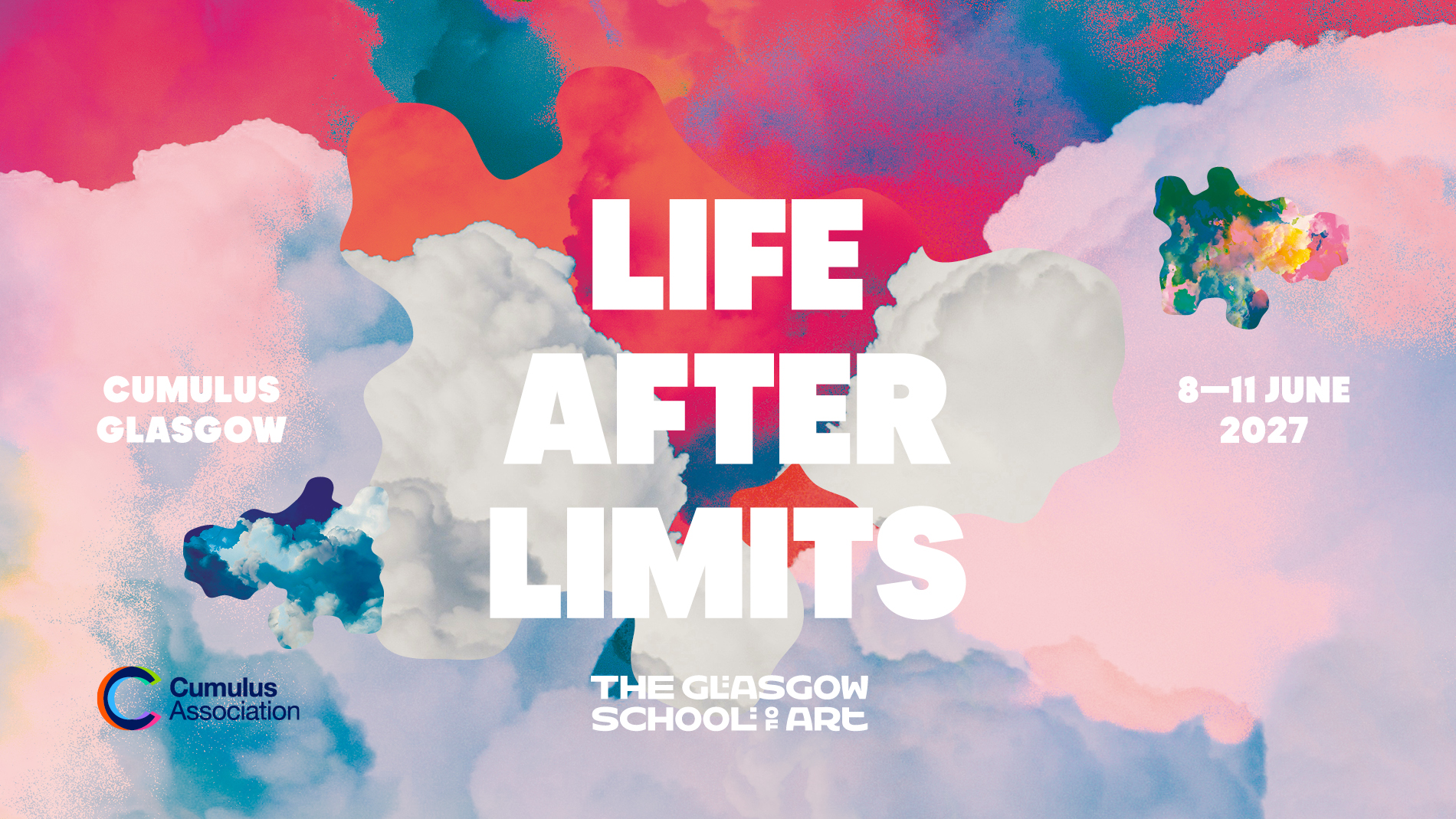
LIFE AFTER LIMITS – CREATIVE PRACTICES FOR THE 21ST CENTURY
The practices, concepts, and theories that defined modern design, art, and architecture – emerging from the industrial revolution and consumer society – profoundly shaped the capitalist culture of the nineteenth, twentieth and early twenty-first centuries. However, these approaches may have now exhausted themselves. Today, they appear increasingly constrained by their own histories and intrinsic limitations – born of empire, colonialism, ecological extractivism, and an unwavering faith in the notion of technological Progress. The failure to reckon with the long-term consequences of enriching certain geographies and populations at the expense of the planet’s other inhabitants is now impossible to ignore.
For too long, Western economic and creative models have been driven by the assumption of limitless consumption – an unsustainable fantasy that is rapidly unravelling in the face of ecological collapse, resource depletion, and widening inequalities in health, wealth and technology. If unchecked consumption defined the modern world, then any viable future demands an entirely different way of living, thinking, and making. Other cultures – many of which have long prioritised balance, harmony, and reciprocity – may hold vital lessons as we consider alternatives. The idea of equilibrium has shaped traditions across time: equilibrium with the environment (regeneration), with the self (appetites, desires, psychological health), and with other inhabitants of the planet (ecology, animistic beliefs, and non-human existence). The question now is whether we have the humility to learn from these perspectives before it is too late – and what does this mean for the education of creative practitioners?
An Era of Exceeding Limits
Today, we are living in an era defined by its transgression of prior limits, norms and “laws” – ecological, economic or conceptual. The thermal boundaries of the Earth’s climate, once thought secure, are collapsing: from exceeding the 1.5°C warming threshold set by the Paris Agreement to the accelerating loss of biodiversity or the penetration of microplastics into the depths of the ocean and the organs of the human body. Economic structures, once based on tangible value, now dissolve into digital abstractions – cryptocurrencies, NFTs, derivatives and financialisation – transforming physical, intellectual and creative labour globally. Technologies such as Artificial Intelligence and quantum computing are reshaping our cognitive landscapes at unprecedented speed, while efforts to colonise space may reflect the persistence of old extractivist mindsets rather than a genuine reckoning with the planetary crisis we have created.
Today, knowledge itself appears to be in flux. Scientific paradigms are being rapidly superseded, philosophical certainties are being confounded, and indigenous wisdom – long dismissed by the Western intellectual tradition – is at once being celebrated for its ecological insight while also remaining under existential threat. While algorithms threaten to transform datasets into facts and inherent biases into the basis of normative expectations, ignoring ethnicity, cultural context or gendered experience as what can be counted becomes what will be measured and valued.
Rethinking Knowledge, Creativity, and Progress
The old rules no longer apply. Traditional forms of expertise, rooted in disciplinary specialisms, seem increasingly unable to explain or anticipate the transformations unfolding around us. The historical habits enshrined in modernist and industrial-era thinking may be incapable of addressing the complexity of the challenges we now face. So, how do we explore new ways of knowing, innovative approaches to generating knowledge, and pioneer creative practices relevant to our situation? Does transdisciplinary collaboration offer the possibility of new methods, theoretical or conceptual breakthroughs, and material innovations that respond to pressing social, economic, and ecological imperatives? If we are living in an era of emergence, transformation and uncertainty, is the ability to prototype possibilities in real time a core comptency of creative practice?
Or, alternatively, if the dominant worldview of the industrial and capitalist age is being called into question, is it time to acknowledge that we have much to learn from older and less “extractivist” ways of knowing? Has the industrial era been an ecological and historical anomaly – one that must be undone if we are to regenerate the planet and its interwoven ecosystems? How might we meaningfully integrate knowledge from indigenous cultures, pre-industrial traditions with contemporary scientific and technological expertise to forge new paths forward?
Our era demands more than minor adjustments – it requires a fundamental reimagining of how we live, create, and co-exist on this planet. The question is no longer whether we need to change but rather how radically and how soon we are willing to do so? With this in mind, this gathering calls for critical dialogue(s) on the future of creative practices and creative education in a world undergoing transformation. By engaging with historical legacies, emerging technologies, ecological imperatives, and alternative knowledge systems, the Life After Limits Cumulus Glasgow 2027 Conference aims to foster innovative, ethical, regenerative and planet-focused approaches to creative pedagogy, research and practice – to living. We invite scholars, practitioners, and educators to contribute to a discourse that will re-imagine the next generation of creative practices in response to an era of exceeding limits.
Cumulus Glasgow 2027 is a global forum for advancing knowledge, innovation and practice in creative education. You can submit your paper to one of the proposed tracks below.
Avenues of Exploration: Life After…?
The Biological Body – Prosthetics, augmentations, and bio-genetics challenge us to reimagine what the physical body is, how it functions or where its technological boundaries exist.
Disciplinary Expertise and Education – Are the creative disciplines and forms of academic expertise inherited from the nineteenth and twentieth centuries still relevant in an age of transdisciplinary collaboration and systemic complexity? Are the institutional structures of higher education relevant to contemporary or future challenges?
Nature – Ecological systems reveal the interdependence of humanity and nature. How can we move beyond the notion of the planet as a passive exploitable resource?
Nations, States and Cities – could communities, communes and neighbourhoods in “mega-cities” replace the inherited forms of metropolitan life? Do bio-regions, “pop-up cities” and “networked states” reveal emerging forms of “inhabitance” and political governance indicative of ecological and technological transformation?
The Human Mind – As Artificial General Intelligence advances, we must reconsider what it means to think, create, and collaborate alongside machines, algorithms and global digital systems. While code is embedded in designed artefacts and embodied in robots we are increasingly appreciating cognition as an embodied phenomenon that links creativity to context, people to place, subjectivity to technology.
Planet Earth – The Anthropocene forces us to abandon the outdated notion of the Earth as a passive, geological entity. Instead, our planet is a site of ecological transformation, technological ambition, orbital systems and political contestation – even as plans are made for extra-terrestrial technologies, travel, resource extraction and habitation.
The Future – Design has long been preoccupied with speculation and visions of the future, but should we instead focus on alternative models of inhabiting the global present and its alternative(s), rather than an endlessly deferred potential “future”?
Excess – Consumer capitalism has delivered luxury, disposability, and relentless growth. Should we instead explore degrowth and the role of designers, innovators, and creatives in shaping ecological economics?
Certainty – Complex systems resist easy modelling, requiring us to think probabilistically rather than deterministically. How should Design Research engage with uncertainty and material practices that anticipate possible futures?
Life – The “more-than-human” turn in design obliges us to rethink the very nature of life, relationships, and agency and the apparent centrality of the human to such debates. How should design proceed if we move beyond the anthropocentric focus on “users” and “stakeholders” to a post-human sensibility, where actants create relations, networks, systems and ecologies that enable and constitute phenomenal experience (life)?
Materiality – long a guiding tenet of creative practices the concept has been transformed by recent scientific and digital discoveries, increased ecological awareness and the “relational turn” of design culture and practice. How will creative practices use emergent, regenerative, cultural or informational “materials”?
Cumulus Glasgow 2027 Life After Limits will accept submissions in a range of recongised formats. These include Academic Papers, X-Formats and Poster Presentations.
Abstracts submission deadline: November 30, 2026
Check out the submission details at https://www.cumulusglasgow2027.com/call-for-papers.
The Cumulus PhD Network is launching a call for short papers, dedicated exclusively to PhD students, inviting them to share their doctoral research during the Cumulus Glasgow 2027 conference in a dynamic Pecha Kucha format (20 slides advancing automatically every 20 seconds). Check the details and deadlines here.
Life After Limits Cumulus Glasgow 2027 conference
June 8-11, 2027
Glasgow, UK
Hosted by the Glasgow School of Art.